Navigating kindergarten readiness involves assessing crucial skills – academic, cognitive, social-emotional, physical, and self-help – often aided by comprehensive checklists available as PDFs.
Understanding Kindergarten Readiness
Kindergarten readiness isn’t about formal academics alone; it’s a holistic view of a child’s development. Numerous resources, including detailed checklists in PDF format, help parents gauge preparedness across multiple domains. These assessments, like those created by Covenant Home, evaluate skills from number and letter recognition to crucial social-emotional competencies.
Focus extends beyond academics to encompass cognitive abilities – problem-solving, following directions, and categorization. Physical development, including both gross and fine motor skills, is also key. Furthermore, self-help skills like independent dressing and hygiene are vital for a smooth transition. Understanding these facets, as outlined in various 2023 readiness guides, empowers parents to support their child’s success.
Why a Checklist is Important
A kindergarten readiness checklist, often available as a 2023 PDF, provides a structured framework for evaluation. It moves beyond subjective feelings, offering objective insights into a child’s strengths and areas needing support. These checklists, like those used in school readiness assessments in the Philippines, ensure a comprehensive overview.
They facilitate targeted preparation, allowing parents and educators to focus on specific skill gaps. Utilizing such tools helps identify if a child demonstrates imagination features, as studied by educators, or requires further development in areas like emotional regulation. A checklist promotes proactive intervention, ultimately fostering a positive and successful kindergarten experience for the child.
I. Academic Skills
Essential academic foundations include letter and number recognition, alongside phonological awareness and pre-writing abilities – key components assessed in kindergarten readiness checklists.
Letter Recognition (Uppercase & Lowercase)
Proficiency in letter recognition, both uppercase and lowercase, is a foundational academic skill for kindergarten success. Readiness checklists frequently evaluate a child’s ability to accurately identify all 26 letters. Assessments, like those found in kindergarten readiness PDFs, often involve pointing to letters randomly and asking the child to name them.
Recognizing letters isn’t just about naming; it’s a crucial step towards decoding words and developing early reading skills. A child demonstrating strong letter recognition will be better prepared to begin phonics instruction and engage with written language. Some checklists detail specific expectations, such as recognizing a certain percentage of letters correctly.
Number Recognition (0-10 & Beyond)
Solid number recognition skills, extending beyond 0-10, are vital for kindergarten readiness. Many checklists, available as downloadable PDFs, assess a child’s ability to verbally identify numerals. Documents show a child recognizing all numbers up to 10, indicating a strong foundation. This skill isn’t merely rote memorization; it’s a building block for understanding mathematical concepts.
Kindergarten curricula often introduce basic addition and subtraction, requiring children to quickly and accurately identify numbers. Readiness assessments gauge a child’s ability to count objects and associate numerals with quantities. Proficiency in number recognition sets the stage for future mathematical success and problem-solving abilities.
Phonological Awareness
Phonological awareness – the ability to recognize and manipulate the sounds of spoken language – is a key predictor of reading success. Kindergarten readiness checklists, often found as PDFs, frequently include assessments of this crucial skill. This encompasses broader sound awareness, not just letter-sound correspondence.
Developing phonological awareness prepares children to decode words and become proficient readers. Assessments evaluate skills like rhyming, syllable segmentation, and identifying initial sounds. Strong phonological awareness supports early literacy development and lays the groundwork for a positive reading experience. It’s a foundational skill assessed in school readiness evaluations.
Rhyming Skills
Rhyming is a fundamental component of phonological awareness, often specifically assessed on kindergarten readiness checklists available as PDFs. The ability to recognize and produce rhyming words demonstrates a child’s understanding of sound patterns within language.
Checklists typically involve tasks like identifying rhyming pairs (cat/hat) or generating rhyming words for a given word. This skill isn’t about recognizing letters; it’s purely auditory. Developing rhyming skills builds a foundation for phonological awareness, crucial for decoding and reading fluency. Early exposure to rhymes through songs and games significantly supports this development, preparing children for literacy success.
Syllable Counting
Syllable counting, a key aspect of phonological awareness, is frequently included in kindergarten readiness assessments, often found within comprehensive checklists in PDF format. This skill involves a child’s ability to break down words into their individual sound units – syllables.
A checklist might ask a child to clap for each syllable in a word (e;g., “but-ter-fly”). This demonstrates an understanding of the rhythmic structure of language. Mastering syllable counting aids in reading and spelling, as it helps children segment and blend sounds. Activities like clapping, chanting, and using manipulatives can effectively build this skill, preparing them for more complex phonological tasks.
Pre-Writing Skills
Pre-writing skills are foundational for kindergarten success and are consistently evaluated in school readiness checklists, often available as downloadable PDFs. These skills aren’t about perfect handwriting, but rather the development of the physical and cognitive abilities needed to eventually write legibly.
Checklists typically assess a child’s ability to hold a pencil correctly using a tripod grasp, and their proficiency in drawing basic shapes like circles, squares, and triangles. These activities build hand-eye coordination and fine motor control. Strengthening these skills prepares children for the demands of writing letters and numbers, setting a positive stage for early literacy development.
Holding a Pencil Correctly
A proper pencil grasp is a key pre-writing skill assessed in kindergarten readiness checklists, frequently found as downloadable PDFs. It’s not about perfection, but a functional tripod grasp – using thumb, index, and middle finger – allowing control and endurance.
Checklists evaluate if a child can maintain this grasp without excessive tension; Developing this skill prevents hand fatigue and promotes legible writing. Activities like coloring, drawing, and playdough manipulation strengthen hand muscles. Early intervention is helpful if a child struggles, as a correct grasp builds a foundation for future writing success and overall fine motor development.
Drawing Shapes
Kindergarten readiness checklists, often available as 2023 PDFs, commonly include shape recognition and drawing abilities. Children should ideally be able to copy basic shapes like circles, squares, triangles, and rectangles with reasonable accuracy.
This isn’t about artistic skill, but demonstrating developing fine motor control and visual-spatial understanding. Shape drawing builds pre-writing skills and reinforces geometric concepts. Activities like puzzles, building blocks, and tracing shapes support this development. Checklists assess if a child can independently attempt these shapes, showing foundational skills necessary for early math and art activities in kindergarten.
II. Cognitive Development
PDF kindergarten checklists emphasize problem-solving, following directions, categorization, and memory skills – vital cognitive abilities for success in a classroom environment.
Problem-Solving Skills
Kindergarten readiness checklists frequently assess a child’s budding problem-solving capabilities. These aren’t complex equations, but rather the ability to navigate simple challenges independently. Can your child figure out how to build a tower with blocks that keeps from falling? Or perhaps determine what piece is missing from a puzzle?
PDF resources highlight the importance of observing how a child approaches a new task. Do they try different strategies? Do they ask for help when needed, or persist independently? Developing these skills, as noted in studies on preschooler development, is crucial for academic and social success. A child demonstrating initiative and a willingness to try is well-prepared for kindergarten’s learning environment.
Following Multi-Step Directions
A key component of kindergarten readiness, often detailed in 2023 checklists (available as PDFs), is the ability to follow multi-step directions. This goes beyond simple requests like “Please sit down.” Can your child successfully complete a sequence like, “Pick up your crayons, put them in the box, and then bring me the book?”
Assessments, like those used by Covenant Home, often include observing this skill. The ability to retain and execute a series of instructions demonstrates cognitive development and listening comprehension. This skill is vital for classroom participation and completing assignments. Success here indicates a child is prepared to navigate the structured environment of kindergarten.
Categorization & Sorting
Kindergarten readiness checklists, frequently found as 2023 PDFs, often evaluate a child’s ability to categorize and sort objects. This foundational cognitive skill demonstrates logical thinking and early math concepts. Can your child sort toys by color, shape, or size? Can they group items based on a shared characteristic – for example, putting all the animals together?
School readiness assessments, like those utilized in the Philippines, likely include this evaluation. Successfully categorizing and sorting builds problem-solving skills and prepares children for activities involving classification and organization within the classroom setting. This skill is crucial for early learning success.
Memory Skills
A 2023 kindergarten readiness checklist PDF will typically assess a child’s developing memory skills. This isn’t about rote memorization, but rather the ability to recall information briefly and apply it. Can your child remember a simple sequence of instructions – like “get your shoes and then your coat”? Can they recall details from a story you’ve read together?
Evaluations, such as those used by Covenant Home, consider memory as a key indicator of school preparedness. Strong memory skills support learning across all areas, from academics to social interactions. Preschoolers’ memory development is also a focus of psychological studies, highlighting its importance.
III. Social-Emotional Development
Kindergarten readiness PDFs emphasize emotional regulation, sharing, and respecting others. These skills, alongside managing separation anxiety, are vital for a positive school transition.
Sharing & Taking Turns
A key component of kindergarten readiness, as highlighted in many 2023 checklists (often available as PDFs), is a child’s ability to share toys and materials with peers. This demonstrates social awareness and consideration for others.
Successfully taking turns during games and activities is equally important. It fosters patience, cooperation, and the understanding of social rules. Kindergarten classrooms heavily rely on collaborative play, making these skills foundational.
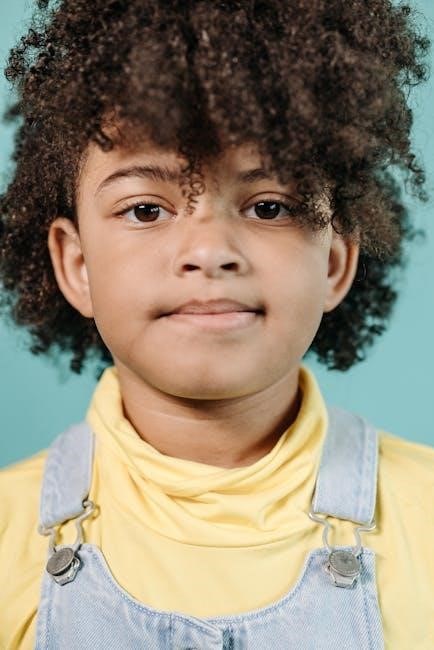
Checklists often assess whether a child can verbally express a desire to share or take a turn, and if they can do so without significant distress or conflict. Developing these abilities contributes significantly to a child’s positive social interactions and overall classroom experience.
Emotional Regulation
Kindergarten readiness checklists, frequently found as 2023 PDFs, emphasize emotional regulation as a vital skill. This involves a child’s capacity to understand and manage their feelings – frustration, anger, sadness – in appropriate ways.
Being able to calm oneself down when upset, even with minimal adult intervention, is a significant indicator of preparedness. Checklists assess whether a child can identify their emotions and express them verbally rather than through outbursts.
The ability to cope with transitions and minor disappointments is also evaluated. Emotional regulation supports positive peer interactions and a child’s ability to focus on learning within the classroom environment.
Separation Anxiety Management
Many 2023 kindergarten readiness checklists, often available as downloadable PDFs, directly address separation anxiety. This assesses a child’s ability to comfortably separate from parents or caregivers without excessive distress.
Checklists evaluate if a child can engage in activities independently, even when a parent isn’t immediately present. Mild anxiety is normal, but prolonged or intense reactions can hinder adjustment to the kindergarten setting.
Successful management involves building a child’s confidence and trust in their teacher and the classroom environment. Preparation through visits and discussions can ease the transition, and checklists help parents gauge their child’s readiness for this crucial step.
Respect for Others
Kindergarten readiness checklists, frequently found as 2023 PDFs, consistently emphasize social-emotional skills, with respect for others being paramount. These assessments look beyond academics, focusing on a child’s ability to interact positively with peers and adults.
Checklists evaluate behaviors like listening attentively, taking turns, using polite language (“please” and “thank you”), and understanding personal space. Demonstrating empathy and responding appropriately to others’ feelings are also key indicators.
A child exhibiting respect creates a harmonious classroom environment, fostering collaboration and learning. Parents can utilize checklists to identify areas where their child may need further guidance and practice before starting kindergarten.
IV. Physical Development
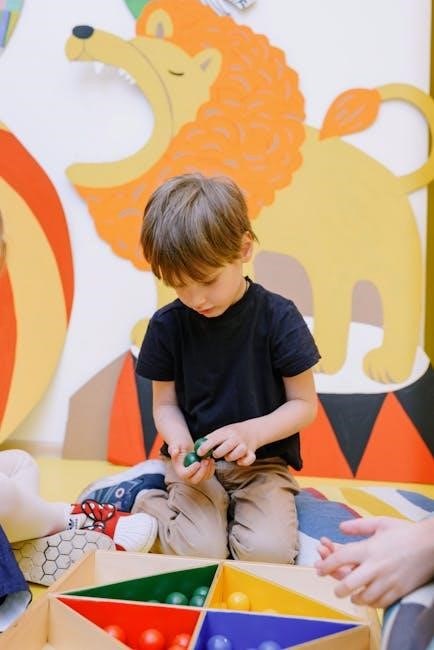
Kindergarten checklists assess both gross and fine motor skills, evaluating abilities like running, cutting, and buttoning – essential for classroom participation and independence.
Gross Motor Skills
Evaluating gross motor skills is a key component of kindergarten readiness assessments, often detailed within comprehensive checklists. These skills are fundamental for navigating the classroom environment and participating in physical activities. A child should demonstrate proficiency in basic movements like running, jumping, and hopping, showcasing coordination and balance.
Furthermore, the ability to throw and catch a ball, even in a rudimentary fashion, indicates developing hand-eye coordination and spatial awareness. Checklists frequently include observations of a child’s ability to maintain balance while moving and to navigate obstacles safely. These skills aren’t just about physical prowess; they contribute significantly to a child’s confidence and overall development, preparing them for the active learning environment of kindergarten.
Running, Jumping, Hopping
Kindergarten readiness checklists often prioritize assessing a child’s ability to perform fundamental gross motor skills, with running, jumping, and hopping being central to this evaluation. A child should be able to run forward with reasonable coordination, avoiding frequent stumbling. Jumping, even from a low height, demonstrates leg strength and coordination.
Similarly, hopping on one foot, even briefly, indicates developing balance and control. These skills aren’t merely about physical ability; they contribute to spatial awareness and body control, essential for classroom activities and playground interactions. Observing these movements provides valuable insight into a child’s physical development and readiness for the demands of kindergarten.
Throwing & Catching
A kindergarten readiness checklist frequently includes evaluating a child’s throwing and catching abilities, key indicators of hand-eye coordination and overall physical development. While perfect form isn’t expected, a child should demonstrate a basic overhand throwing motion with some directional control.
Catching, even with a large ball and gentle toss, showcases developing visual tracking and reaction time. These skills aren’t just about sports; they translate to classroom tasks like manipulating objects and participating in group games. Successful throwing and catching contribute to a child’s confidence and participation in physical activities, fostering a positive attitude towards movement.
Fine Motor Skills
Kindergarten readiness checklists emphasize fine motor skill development, crucial for tasks like writing, drawing, and self-care. These skills involve the small muscles in the hands and fingers, requiring coordination and control. A key assessment area is a child’s ability to manipulate small objects effectively.
Specifically, checklists often evaluate skills like cutting with scissors (along a line is a plus!), and independently buttoning and zipping clothing. These actions demonstrate dexterity and problem-solving. Developing these skills prepares children for classroom activities and boosts their independence, contributing significantly to a smooth kindergarten transition.
Cutting with Scissors
A kindergarten readiness checklist frequently includes assessing a child’s scissor skills, a vital component of fine motor development. Proficiency isn’t necessarily about perfect cuts, but demonstrating the ability to hold scissors correctly and make a controlled snip.
Many checklists note whether a child can cut along a line, indicating improved hand-eye coordination and spatial awareness. This skill builds foundational dexterity needed for writing and other classroom tasks. Practice with safety scissors is key, fostering independence and preparing them for art projects and activities requiring precise movements.
Buttoning & Zipping
Kindergarten readiness checklists often evaluate a child’s ability to manage clothing fasteners, specifically buttoning and zipping. These are essential self-help skills promoting independence and reducing reliance on teacher assistance during transitions.
Mastering these tasks demonstrates developing fine motor skills and hand-eye coordination. While checklists may not require complex buttoning (like a tiny shirt button), the ability to manage larger buttons and zippers on jackets or pants is commonly assessed. Practice at home with dedicated clothing items can significantly boost a child’s confidence and preparedness for the kindergarten environment.
V. Self-Help Skills
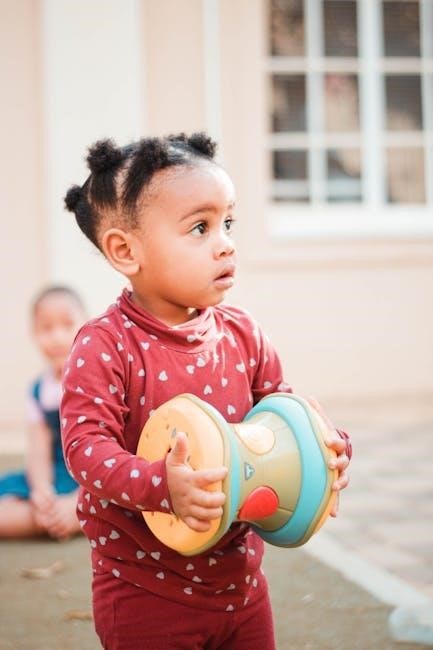
Self-sufficiency is key! Kindergarten checklists prioritize skills like potty training, dressing, eating, and hygiene, fostering independence and classroom success.
Potty Training
Consistent potty training is a significant milestone assessed on kindergarten readiness checklists. Ideally, your child should demonstrate reliable bladder and bowel control, initiating trips to the restroom independently and managing accidents with minimal assistance.
Checklists often look for the ability to pull pants up and down, wipe themselves effectively (though teacher assistance is expected initially), and communicate the need to use the restroom promptly. While occasional accidents are normal, consistent dryness throughout the day is a positive indicator.
Parents should note that complete mastery isn’t always required, but a strong foundation in these skills significantly eases the transition to a classroom environment and promotes self-confidence.
Dressing Independently
Kindergarten readiness checklists frequently evaluate a child’s ability to manage their clothing. This includes skills like putting on and taking off jackets, coats, and shoes – crucial for navigating transitions during the school day.
The ability to dress themselves, even with some assistance, demonstrates growing independence and fine motor skill development. Checklists often assess buttoning, zipping, snapping, and Velcro closures. While mastering all techniques isn’t essential, attempting these tasks shows preparedness.
Practicing these skills at home builds confidence and reduces reliance on teachers for assistance, allowing them to focus on instruction and fostering a sense of self-sufficiency.
Eating Independently
A key component of kindergarten readiness, assessed in many checklists, is a child’s ability to eat independently. This extends beyond simply using utensils; it encompasses managing lunch containers and requesting assistance when needed.

Checklists often look for skills like opening food packages, using a fork and spoon effectively, and practicing good table manners. Being able to self-feed allows children to participate fully in lunchtime activities and fosters a sense of autonomy.
Encouraging self-sufficiency at mealtimes prepares them for the social environment of the cafeteria and reduces the burden on classroom staff.

Hygiene Skills (Handwashing)
Proper hygiene, particularly handwashing, is a consistently emphasized skill on kindergarten readiness checklists. This isn’t just about cleanliness; it’s a vital component of preventing the spread of germs within the classroom environment.
Assessments typically evaluate a child’s ability to wash their hands independently, using soap and water for at least 20 seconds – a skill often taught through songs or games. Knowing when to wash hands (before meals, after using the restroom) is equally important.
Mastering this skill contributes to a healthier school environment for everyone and promotes lifelong healthy habits.
Leave a Reply